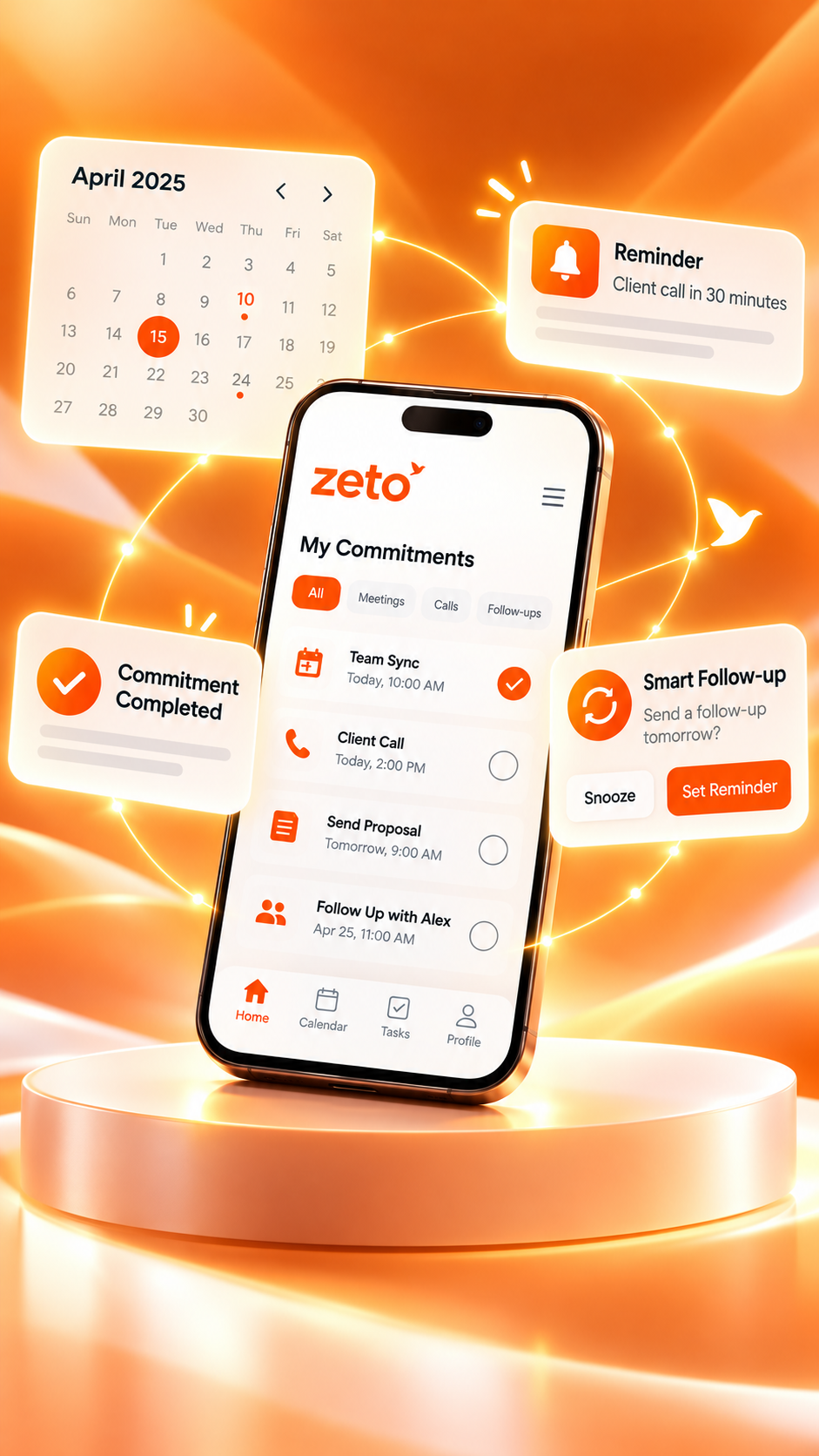
How Conversation Intelligence Helps Sales Teams Improve Customer Follow-Ups
A sales call is more than an activity on a dashboard. It contains questions, expectations, buying signals and promises. Conversation intelligence helps teams preserve that context—and use it to make the next customer interaction more relevant.

A customer says, “Please send the updated quotation by Tuesday, and make sure the warranty terms are included.” The sales representative agrees, finishes the call and moves on to the next prospect. Three days later, the customer calls again: “Did you forget what we discussed?”
Sometimes the quotation was never prepared. Sometimes it was sent without the information the customer requested. And sometimes a team member was waiting for internal approval—but nobody told the customer. Each situation looks like a delayed follow-up, yet each needs a different solution.
This is where conversation intelligence for sales becomes useful. Instead of remembering only that a call happened, a team can revisit what the customer needed, what was promised, who was responsible and what remains open. The result is a more informed follow-up process, not simply more reminders.
Good customer follow-up is not just about contacting someone again. It is about returning with the right information, at the right time, in response to the actual conversation.
Why promising sales conversations turn into missed follow-ups
Salespeople move between prospecting calls, product demonstrations, price discussions, internal approvals, and customer meetings. Important information can easily become scattered across notebooks, chats, spreadsheets, CRM entries and personal memory.
The challenge is often not a lack of effort. It is the loss of context between one conversation and the next.
Details are remembered differently
A customer requests two options, but the rep remembers only one. A quotation goes out missing the specification that mattered most.
No clear owner or deadline
“We'll update you soon” sounds reassuring but does not establish who will do the work or when the customer should expect it.
Context is lost during handoffs
Sales hands a requirement to operations or technical support, but the original concern and promised response are not fully passed along.
Activity is mistaken for progress
A CRM may show that a call was completed even though the customer’s central question remains unanswered.
Over time, these small gaps can create repeated calls, avoidable misunderstandings and poor customer experiences. A better workflow needs to preserve the meaning of the conversation as well as the date of the next activity.
What is conversation intelligence for sales?
Conversation intelligence refers to using permitted customer calls, meetings and related discussions as sources of structured, reviewable information. AI tools can help turn available conversations into searchable transcripts, concise summaries, customer questions, agreed decisions and action items.
For sales teams, that information can answer practical questions: What did the buyer ask for? What did we commit to? Was there a price concern? What has to happen before the next call?
Unlike a simple voice recorder, conversation intelligence helps organize information found in the discussion. Unlike a traditional CRM activity entry, it can preserve additional context that a salesperson might otherwise forget to type.
Important distinction: Conversation intelligence is not a replacement for a CRM, an order-management system or a completed task. It provides context and suggested follow-ups; the sales team must still verify details, perform the work, update records and communicate with customers.
The value becomes especially clear when the same account has several conversations over weeks or months. Context can be revisited instead of reconstructed from incomplete notes.
From customer conversation to completed follow-up: five steps
Teams can build a repeatable follow-up process around the conversation itself. The following model combines AI-assisted organization with human responsibility.
Capture with permission
Collect eligible call recordings, meeting notes or voice notes through approved methods. Inform participants and follow applicable recording and privacy requirements.
Understand the requirement
Review the summary and identify the customer's objective, constraints, questions, objections, decision criteria and any changes to earlier instructions.
Confirm the commitment
Make the deliverable, responsible person and due date explicit. Distinguish what was promised from what is only being considered or requested.
Prepare a relevant response
Use the conversation history to tailor the next email or call. Reference the real customer need rather than sending a generic “just checking in” message.
Verify and close the loop
Check whether the quotation, sample, callback or answer was actually delivered; record the result and any new commitment that emerged.
Keep a human in control
Confirm names, pricing, quantities, dates and customer intent against original sources before taking a consequential action.
Customer context + specific promise + responsible owner + agreed timing + verified outcome. A reminder without context is easy to dismiss. A next step attached to a customer expectation is easier to act on.
A quotation request that could easily get lost
Consider a hypothetical business-to-business sales discussion. A facilities manager at Northstar Warehousing asks for a revised proposal for flooring work at two sites. The customer wants the scope separated by location, an explanation of the recommended finish and an updated timeline. The salesperson promises the revised proposal by Tuesday afternoon.
What the call actually established
Customer need: Two-site proposal with site-specific scope and finish recommendations.
Open question: Which option suits forklift traffic and the site's cleaning schedule?
Sales commitment: Send the revised proposal and explanation by Tuesday afternoon.
Internal dependency: The technical team must confirm the finish recommendation before the proposal is sent.
Now imagine the salesperson moves on to several other meetings. A reminder that says “Follow up with Northstar” will help them remember the account, but it does not explain what needs to be completed.
A conversation-informed record makes the work more specific:
Ask the technical team to confirm the finish and site-specific scope.
Send the corrected proposal and explain the recommendation.
Confirm receipt and ask whether anything is still unclear.
Because the follow-up is grounded in the conversation, it acknowledges the customer’s specific requirements. It also makes an important distinction: sending a message is not the same as resolving the request.
This example shows how to write a context-aware response. It is not a claim that ZETO automatically composes or sends such messages.
Manual notes, CRM updates and conversation intelligence: how they work together
Each tool solves a different part of the sales follow-up challenge. The strongest approach is often to combine them rather than replace one with another.
| Sales need | Manual notes / CRM activity | Conversation intelligence |
|---|---|---|
| Know that a call happened | Logs the date, owner and activity | Links the activity to discussion context when a usable conversation is available |
| Recall customer requirements | Depends on what someone typed | Summarizes and helps retrieve details from the conversation |
| Identify a promise | Requires the rep to enter a task | Can help surface commitments for review and task organization |
| Prepare the next discussion | Review the opportunity record | Revisit questions, concerns and prior decisions alongside the opportunity record |
| Prove work was completed | Requires a verified status or outcome | Provides context but cannot independently prove completion without supporting evidence |
A CRM can remain the official system for opportunity stages, ownership and forecasts. Conversation intelligence can help explain the customer story behind those fields. Together, they can make sales follow-up more accurate and less dependent on one person's memory.
Six practical ways sales teams can use conversation intelligence
Quotation and proposal follow-ups
Return to the customer's requested price breakdown, specifications or deadline before sending a revised document.
Long sales cycles
Retrieve decisions from earlier discussions when several weeks pass between a demonstration, a technical review and procurement approval.
Handling objections
Review whether the concern was budget, timing, compatibility, warranty, stakeholder approval or another issue instead of guessing.
Customer handoffs
Share the permitted summary and open commitments with colleagues so operations and technical teams understand the original expectation.
Key account continuity
Prepare for the next discussion when a different representative takes over, without forcing the customer to repeat the same background.
Sales manager coaching
Discuss real examples of requirement clarification, closing questions and follow-through—while reviewing outcomes and employee context fairly.

These benefits depend on the completeness and quality of available conversations. A tool cannot retrieve context that was never captured, and even captured material may require human correction.
What sales managers should track beyond call counts
More calls do not necessarily mean better customer follow-up. Alongside activity, managers can monitor whether commitments are clear and customers receive the information they were promised.
Use these measures to identify workflow gaps and coach teams. They are suggested management metrics—not a claim that every figure is automatically calculated by ZETO. Evaluate them alongside customer outcomes, deal complexity, workload and recording coverage.
How ZETO AI supports conversation-led customer follow-ups
ZETO AI is built around a simple idea: important work conversations should become useful summaries, commitments and answers you can find later. Its two offerings address related needs at different levels.
For individual sales professionals: ZETO AppZETO App can process supported call recordings saved by the phone's own Phone app, and it can capture meetings and voice notes through its supported workflows. It organizes available conversations into summaries, promises and follow-up items. The Today view helps users revisit open commitments, while People and Projects organize context over time.
With Ask Zeto, a salesperson can ask a question about conversation history—such as “What delivery date did this customer request?” or “What did I promise in the last call?”—and inspect the source behind the answer. That can help prepare for an accurate follow-up without searching through every recording manually.
For managers and teams: ZETO EnterpriseZETO Enterprise brings permitted team conversations, customer signals and open commitments into connected workspaces. Leaders can review follow-up visibility, investigate repeated issues and discuss the evidence behind results rather than evaluating performance solely from a call count.
Make your next sales review more specific.
“Which customers are waiting for a quotation update?”
“What did we agree to send after the last demonstration?”
“Which customer questions are still unresolved?”
“Was the proposed next step actually completed?”
Capability boundaries matter: ZETO does not itself record ordinary phone calls directly. Supported phone-call recordings depend on the device and Phone app. The AI-generated output can contain errors, and recording permissions, access and other product features vary by configuration. Users should verify important details from the original conversation and the actual business record.
Use conversation intelligence to strengthen customer trust
Customer conversations may contain commercially sensitive figures, personal information and confidential plans. A responsible process matters as much as the quality of a summary.
- Capture lawfully and transparently. Follow local recording rules, company policy and any required notice or consent.
- Share only with authorized people. Restrict team access to relevant customer information and approved purposes.
- Verify details before acting. Check amounts, names, delivery dates and precise commitments against source recordings or other reliable records.
- Separate a customer request from a confirmed promise. AI may misinterpret a tentative statement or unclear speaker attribution.
- Keep feedback constructive. Use conversation context for process improvement and fair coaching, not automatic judgments about employees.
When recording quality is low or parts of the discussion are missing, say so. Customer confidence comes from keeping accurate promises and communicating clearly—not from assuming software has understood everything perfectly.
Questions sales teams ask about conversation intelligence
What is conversation intelligence in sales?
It is the use of permitted customer calls, meetings and related discussion records to identify customer needs, decisions, objections and follow-up commitments. AI can help organize and search the material, while people remain responsible for verifying and acting on it.
How does conversation intelligence improve follow-ups?
It gives salespeople a clearer record of what the customer asked, what was promised and what is still unresolved. That can make the next call or message more relevant and reduce reliance on memory alone.
Can conversation intelligence replace a CRM?
No. A CRM usually remains the official system for pipeline stages, accounts, opportunities and forecasts. Conversation intelligence adds context from recorded discussions that can inform and improve CRM notes and follow-up decisions.
Can AI automatically send customer follow-up emails?
Some products offer messaging automation, but this article does not claim that ZETO automatically sends emails or WhatsApp messages. Users should check supported product features and review any outgoing communication before sending it.
Can managers see which customer promises are pending?
ZETO Enterprise describes workspaces that help authorized managers review open commitments, customer signals and follow-up context. Visibility depends on available conversation records, permissions and configuration; a recorded promise is not itself proof of completion.
Does ZETO record every phone call automatically?
No. ZETO's published app description states that its app can pick up compatible recordings saved by the phone's own Phone app after the call. Supported methods depend on device, operating system, settings and applicable recording rules.
Can ZETO find details from an older customer call?
Ask Zeto can answer questions from available, processed conversation history and show source context. Results depend on what was captured and on transcription quality; verify critical information before relying on it.
Will conversation intelligence guarantee higher sales conversions?
No. It can support better preparation, follow-through and coaching, but sales outcomes depend on the product, pricing, buyer needs, competition, service delivery and many other factors. Teams should measure their own results instead of assuming guaranteed improvements.
Better follow-ups begin before the call ends.
The quality of a sales follow-up is often decided in the original conversation: Was the requirement clear? Did someone own the next step? Was a date agreed? Did the team understand what had to happen before responding?
Conversation intelligence helps preserve that information so it does not disappear between calls, handoffs and reporting cycles. When combined with clear ownership and verified action, it can help sales teams respond more thoughtfully and give managers a better basis for improving the customer experience.
The goal is not more reminders. It is fewer forgotten commitments and more useful conversations.
From customer conversations to clearer next steps.
Explore how ZETO AI helps professionals remember agreements, review follow-ups and find answers from previous conversations—and how ZETO Enterprise brings that context to teams.