Your Sales Report Looks Good. But What Are Customers Actually Saying?
A healthy sales dashboard can tell you how busy your team has been. It may not tell you why a customer is hesitating, what they were promised, or which conversation needs attention next.
“Can your team deliver by Friday—and is the revised price final?”
Picture a Monday sales review. The team has completed more calls than last week. Meetings are up, quotations have been sent, and the pipeline looks active. Then the manager asks a different question: “What did our customers actually say?”
That question can be surprisingly hard to answer. A report may show a call took place, but it often cannot show whether the customer was confused about pricing, asked for a different delivery date, raised a competitor's offer, or left the conversation expecting a response by the end of the day.
Sales reports remain essential. They help managers track activity, conversion, revenue and progress. The challenge is that sales activity and customer understanding are not the same thing. When leaders review only the final numbers, they risk missing the conversations that explain those numbers—and the practical decisions that could improve them.
What a good-looking sales report can miss
Most sales reports are built to answer measurable questions. How many leads were contacted? How many meetings were completed? How many quotations were generated? Which opportunities moved to the next stage?
Those are valuable questions—but a customer does not experience your business as a dashboard. They experience it through conversations, commitments, explanations, handoffs and the actions that follow.
| What the report shows | What the manager may still need to know |
|---|---|
| 35 customer calls | Which conversations contained buying intent, unresolved objections or an urgent request? |
| 8 quotations sent | Did the quotations reflect the price, scope and deadline discussed with customers? |
| 12 meetings completed | Who agreed to do what after the meetings, and were those actions completed? |
| A lead marked “follow-up pending” | What was the exact follow-up promised, and why is it still open? |
| An opportunity marked “lost” | Was the issue price, fit, timing, trust, product availability or something else? |
A number can highlight where a problem exists. It does not automatically identify the reason. A low conversion rate might reflect weaker qualification, but it could also reflect customers waiting for technical information, stock confirmation or a revised proposal. Effective management begins by checking the context before choosing a remedy.
What conversation intelligence adds to business reporting
Conversation intelligence is the use of captured business conversations and AI-supported analysis to make important details easier to review: customer needs, questions, promises, decisions, unresolved matters and follow-up tasks. Instead of relying entirely on memory or a short CRM note, teams can work from a more structured record of what was discussed.
It does not replace financial reporting, CRM records or the judgment of experienced managers. Its value is to give those systems and people richer context. That context can help explain the story behind the sales stage and direct attention toward the next useful action.
Activity intelligence
How much work happened: calls made, meetings completed, quotations sent and opportunities progressed.
Conversation context
What the customer asked, what was agreed, what remains uncertain and what needs to happen next.
Good sales leadership needs both. Without activity data, managers cannot see the overall pipeline. Without conversation context, they may respond to every slowdown in the same way—even when the underlying customer issues are different.
Six customer signals worth listening for
Sales leaders do not need to read every word of every meeting. They need a reliable method for finding the details most likely to change the next decision. These six signals are a useful starting point.
Unanswered questions
Did the customer ask about specifications, delivery, implementation or support without receiving a clear answer?
Price and value objections
Is the hesitation really about price, or about unclear scope, risk, service and return on investment?
Promises and deadlines
Did someone agree to share a proposal, arrange a demo or confirm availability by a particular date?
Changes in requirements
Has the customer's budget, quantity, decision process or delivery requirement changed since the first call?
Buying-stage clues
Are the customer's questions becoming more specific, or is the deal waiting on another stakeholder?
Signs of frustration
Has the customer repeated a request, challenged earlier information or asked for an update more than once?
None of these signals should be treated as a guaranteed predictor of purchase. They are clues that require verification and judgment. A customer may sound positive yet not have approval to buy. A customer asking difficult questions may be highly engaged. The goal is to understand the customer's situation, not assign a simplistic score to a person's tone.
When the quotation count looks healthy but the customer is still waiting
Consider a fictional industrial supplier. A salesperson speaks with a factory purchasing manager who requests an urgent quotation for materials. The salesperson prepares and sends the estimate. In the weekly report, the call and quotation are both counted as completed activities.
The activity is complete. The conversation isn't.
One customer call completed. One quotation sent. Opportunity moved to follow-up.
“Please confirm whether you can supply the full quantity by Friday. We also need the revised price before our purchase approval.”
Inventory confirmation, revised commercial terms, an owner for the response, and the customer's approval deadline.
Verify stock internally, send a corrected quote that addresses the customer's conditions, then confirm receipt and clarify the decision timeline.
In this scenario, sending another generic “Just checking in” message is unlikely to solve the customer's concern. The useful follow-up is specific: answer the supply and pricing questions that remain open. If those details were preserved from the original conversation, the salesperson and manager would have a clearer next step.
This is also why managers should not immediately blame the salesperson if the deal stalls. A delayed stock confirmation or approval from another department might be the real barrier. Conversation records can help trace what was promised, but the full situation should be checked with the people involved.
A practical five-step process for better sales reviews
Conversation intelligence is most useful when it becomes part of a simple review routine rather than another dashboard that nobody acts on.
Begin with the existing sales report
Review targets, pipeline movement, conversion, aging opportunities and overdue tasks. Identify where an explanation would change a decision.
Review the relevant customer context
Look at the available call summaries, meeting notes or source conversations associated with the selected opportunities. Focus on customer requests and open commitments.
Confirm the facts with the team
Validate dates, amounts, scope and responsibilities. Ask what was blocked internally, what the customer changed and which promises were realistically achievable.
Assign a specific next step
Set one owner, one action and a sensible deadline. For example: “Confirm dispatch availability, then send the updated quotation before the customer's review.”
Verify the outcome—not just the activity
Check whether the promised information was delivered and whether the customer's question was resolved. Record any new requirement for the next conversation.
This routine turns a performance discussion into a constructive operational decision. The objective is not to create more monitoring. It is to reduce ambiguity, support the sales team and improve the customer experience.
Sales metrics worth reviewing alongside call volume
Call volume remains useful, but it should not become the only signal of success. Teams can add a few practical measures that show whether promises and customer questions are being handled. These are suggested management metrics, not claimed ZETO Enterprise dashboard fields.
| Measure | What it helps answer | A practical way to review it |
|---|---|---|
| Follow-up completion | Did the team complete agreed next actions? | Review completed commitments against those due in a given period. |
| Time to answer | How quickly did customers receive promised information? | Compare the promised reply time with the verified response. |
| Repeated customer questions | Are the same issues being left unresolved? | Look for topics that appear again across subsequent conversations. |
| Quotation clarification | Do customers need repeated corrections to scope or terms? | Track material revisions and the reasons behind them. |
| Opportunity progress | Are meaningful next steps moving deals forward? | Review verified stage changes and customer responses—not reminders alone. |
The right metric depends on the sales cycle. A long industrial procurement process should not be judged by the same timeline as a quick consumer transaction. Use these measures to identify process improvements, not to rank employees without considering account complexity, workload or customer constraints.
How ZETO AI helps connect customer conversations with follow-through
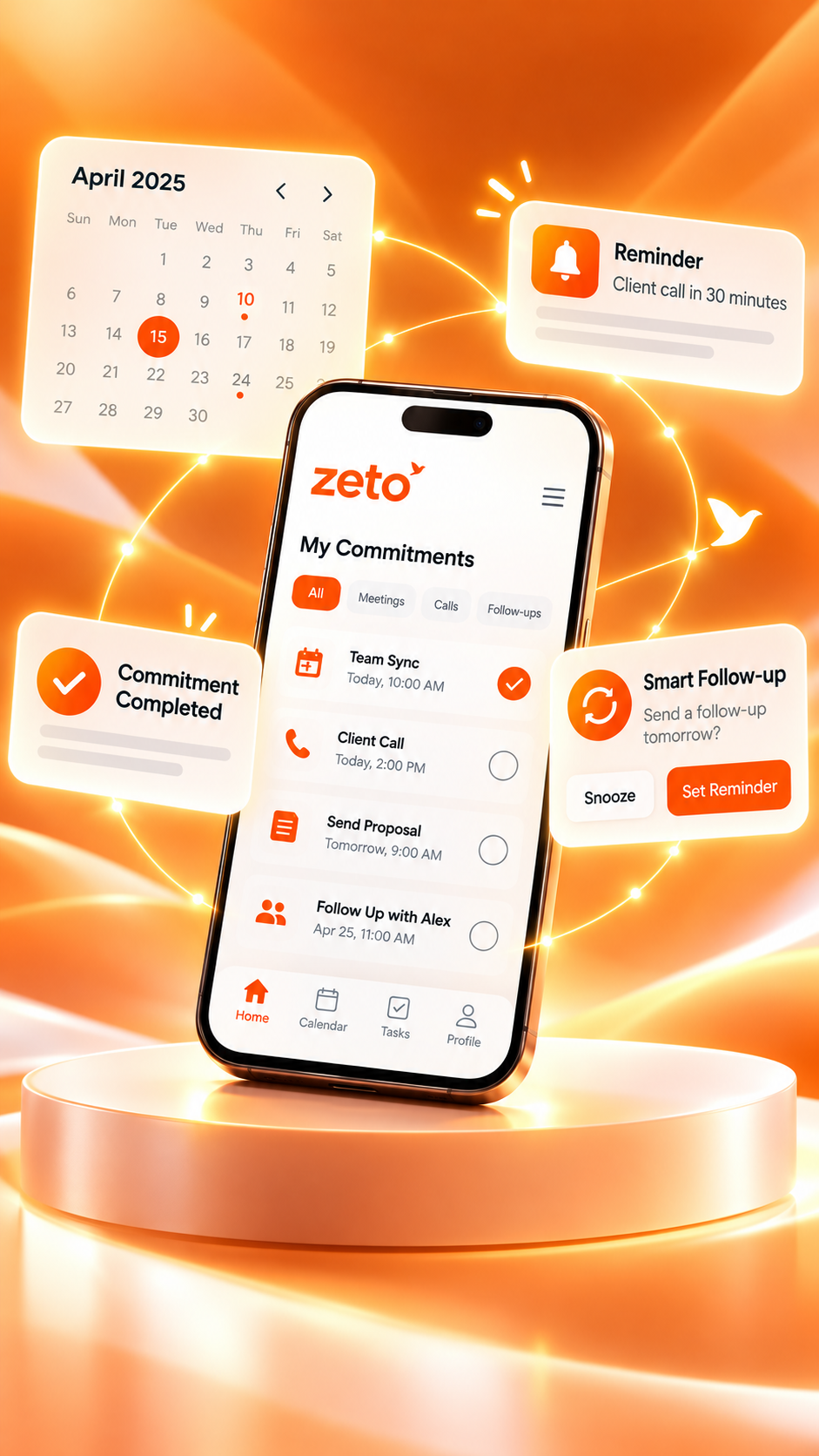
ZETO AI is designed around the idea that work conversations contain important context that should not disappear once a call or meeting ends. The personal app organizes captured conversations into summaries, commitments, follow-up reminders and searchable memory. For teams, ZETO Enterprise presents business-oriented visibility into conversations and what needs attention.
In the ZETO App, users can review what happened, what was decided, what was promised and what remains open. Ask Zeto can help users look up information from their captured history, with references to where an answer came from. This makes it easier to revisit an earlier customer discussion before replying.
The ZETO Enterprise approach is especially relevant to managers trying to see beyond a simple count of calls. Conversation context can support reviews of unresolved commitments, customer communication and team follow-through. It should complement—not replace—the CRM, financial reporting, direct customer contact or a manager's responsibility to verify important facts.

See the conversation behind the numbers.
Discover how ZETO Enterprise brings more context to day-to-day business reviews, or explore the ZETO App for personal conversation summaries and follow-ups.
Customer context is useful only when it is handled responsibly
Business conversations can contain customer contact information, pricing, sensitive requirements and personal details. Before recording or analyzing them, organizations should have a lawful basis, follow applicable recording and privacy requirements, communicate clearly with participants and limit access to people who need the information.
AI summaries may miss nuance, confuse speakers or interpret a statement incorrectly. Managers should check any consequential detail—such as a delivery promise, financial amount or disputed instruction—against the original record and the people involved. A sentiment label or a brief excerpt is not enough to judge employee intent, customer satisfaction or job performance.
Done well, conversation intelligence encourages better coaching: clarify a process, resolve a customer question, improve a handoff and support the person doing the work. It should not become a shortcut for surveillance or automatic blame.
Frequently asked questions
What does conversation intelligence mean in sales?
It means using information from captured customer calls and meetings to understand needs, questions, commitments, objections and next actions. It adds context to the activity and outcome data already found in reports and CRM tools.
Can a sales report show what a customer actually said?
Usually not by itself. A report may include written notes, but the underlying conversation or a dependable summary is often needed to confirm exact requirements, dates or promises.
Does conversation intelligence replace a CRM?
No. A CRM helps manage contacts, deals, activities and pipeline records. Conversation intelligence can provide richer context from the interactions associated with those records. The two serve different but complementary purposes.
How can managers use conversation context without micromanaging?
Focus reviews on selected customer issues, unclear handoffs and unresolved commitments. Give employees an opportunity to explain the full situation, and use findings to improve processes and coaching rather than monitoring every moment.
Can ZETO AI automatically record all customer calls?
No. According to the current app description, ZETO AI processes recordings saved by compatible phones' own Phone apps, where supported and permitted. It does not independently record standard telephone calls.
Can Ask Zeto find an old customer promise?
It can answer questions from conversations that have been captured and processed in the app, such as an earlier agreement or follow-up. The answer should be checked against its referenced source when accuracy matters.
Are more sales calls always a sign of better performance?
Not necessarily. Call volume measures activity, but customer fit, response quality, timely follow-through and verified outcomes also matter. Review the measures that fit your sales cycle.
What should a business verify before using conversation intelligence?
Check recording permissions and consent requirements, data access policies, accuracy controls, retention practices and whether the workflow fits employees' and customers' legitimate expectations.
A stronger sales review starts with a better question
A report is a starting point, not the whole explanation. Calls completed, meetings held and quotations sent help a business understand activity. Customer conversations can reveal the requests, confusion, commitments and timing behind that activity.
The most useful question is not simply, “How many calls did we make?” It is also, “What did the customer need, what did we promise, and did we follow through?” When those answers are easier to find and verify, managers can make more informed decisions and teams can respond with greater clarity.