What Your CRM Dashboard Cannot Tell You About Customer Conversations
Your CRM may show a healthy pipeline, completed calls and quotations sent. But do you know what customers actually asked, what your team promised, and what could stop the next sale?
A dashboard can tell you that a lead was contacted, a deal moved forward or a follow-up was scheduled. But it may not reveal why the customer hesitated, which condition they attached to a purchase, or whether a promise was understood the same way by both sides.
For sales and business leaders, that difference matters. Reports help make work measurable. The underlying conversations explain what those measures mean. A team can log activities consistently and still miss a small requirement that makes all the difference to the customer.
The answer is not to abandon customer relationship management software. It is to connect the records that describe activity with dependable context from customer interactions—when those interactions are available, relevant and used responsibly.
What a CRM dashboard does well
Customer relationship management (CRM) platforms are designed to organize relationships and sales processes. Depending on the system, teams can manage contacts and accounts, update opportunity stages, schedule tasks, log activities, track service cases and monitor pipeline performance.
That is valuable. A manager can identify overdue opportunities, compare forecasting periods, check whether key accounts have been contacted and see which sales activities are recorded. A consistent CRM also helps people work from shared data rather than individual spreadsheets.
Modern CRMs can go much further than these basic records. Some already include call recordings, transcripts, AI-generated summaries, sentiment signals, interaction history or coaching tools. The point of this article is therefore not that every CRM lacks conversation intelligence. It is that a dashboard view on its own may hide important customer context—especially when meaningful conversations have not been captured or reviewed.
Six things your dashboard may not reveal
The customer's real priority
The opportunity says “interested,” but the buyer's priority might be urgent delivery, after-sales service or reliable installation—not price alone.
Unresolved objections
A stalled quotation may reflect a missing sample, uncertainty about warranty terms, or internal approval rather than simple lack of interest.
Exact commitments made
A task labeled “follow up” may not show who promised the revised quote, technical answer or dispatch date, and by when.
Changes over multiple calls
Customers may alter scope, quantities or preferred terms. An old CRM field can remain unchanged even as the conversation evolves.
Communication breakdowns
Sales, operations and service might each believe the next action belongs to someone else. Activity counts rarely explain a broken handoff.
The reason behind a delay
A missed milestone could result from missing customer documents, stock constraints or an unresolved decision—not necessarily lack of effort.
These gaps are not universal CRM limitations. They are common questions whenever the conversation record is incomplete, too compressed, scattered across tools or not connected to the sales review process.
CRM dashboard vs conversation intelligence: what each contributes
Rather than treating CRM and conversation intelligence as competing choices, use each for its strongest purpose. The table below compares a typical activity-focused dashboard with a workflow that includes reviewed customer conversation context.
| Business question | Activity / dashboard view | Conversation context adds |
|---|---|---|
| Did the salesperson call? | Call logged, timestamp and owner | The purpose, questions and outcome of the discussion |
| Was a quote sent? | Quotation date and stage | Conditions the customer stated before approving it |
| Why has the deal slowed? | Days in stage, next activity | Evidence of pricing, timing, technical or approval concerns |
| Who owns the follow-up? | Assigned task and deadline | What was actually promised, to whom and in which interaction |
| How did the customer respond? | Status, notes and activity history | Questions, requirements and changes in customer language |
| What should the manager do? | Prioritize flagged opportunities | Ask a focused question, resolve a blocker or improve a handoff |
A well-configured modern CRM may already provide both columns. If yours does, the next challenge is making sure the underlying information is accurate, accessible to authorized users and acted upon—not simply adding another dashboard.
A proposal that looks healthy—but isn't ready to close
Why is a ₹4.8 lakh opportunity still open?
A sales manager reviews a quotation for ₹4.8 lakh. The CRM shows several customer calls, a proposal marked “sent,” and a follow-up scheduled for Friday. From the dashboard alone, the opportunity appears to be progressing.
“We are considering the order, but the first batch must arrive before our shutdown. Please confirm whether you can split delivery. Also share who will support the site team.”
“I'll check both points internally and confirm by Thursday afternoon.”
By Friday, the CRM still shows “Follow-up due.” It does not necessarily show that the customer is waiting on a revised delivery plan and a named support contact. A manager who only sees the stage may assume that a discount would help. But the actual obstacle is clarity on delivery and support.
With an accurate conversation summary or recording available, the next action becomes more specific: verify logistics, confirm the support arrangement, update the customer, and correct the CRM record. The manager no longer needs to guess.
Notice what this example does not prove: it does not show that one tool guarantees a sale, or that a sales employee is responsible for a delayed promise. It shows why reviewing the full context before deciding what to do can be more useful than drawing a conclusion from the stage alone.
Seven questions business leaders should ask
- What did the customer actually request? Separate the customer's exact requirement from the salesperson's interpretation.
- What changed since the last discussion? Review revisions to budget, delivery requirements, decision-makers or technical scope.
- What did our team commit to—and when? Identify the commitment, the owner and any deadline rather than treating “follow up” as a complete task.
- Which questions remain unanswered? Look for unresolved pricing, installation, quality, legal or service concerns.
- What does the customer need before deciding? Find the missing information or action that could move the discussion forward.
- Was there a handoff problem? Check whether the next action moved clearly from sales to operations, finance or support.
- Can we verify the evidence fairly? Confirm important claims with the source and invite relevant team members to explain the wider context.
“Why are you not closing this deal?”
“Which customer condition is unresolved, and what can we clear today?”
A five-step process for more informed sales reviews
Start with the CRM signal
Choose an overdue follow-up, stalled opportunity or repeated complaint. Use clear selection criteria instead of reviewing every employee conversation.
Open the relevant context
Review the authorized notes, meeting summary or captured interaction. Focus on what the customer requested, what the team said and what remains unresolved.
Confirm the facts with people
Check dates, quantities and names against the original source when needed. Ask the salesperson or responsible teammate whether there are missing details.
Agree on a specific next action
Assign one clear owner, one deliverable and a practical deadline. Ensure internal blockers have an escalation route.
Update the CRM and verify resolution
Record the agreed next step in the team's normal system of record and check whether the customer actually received the promised response.
This process can improve decision quality without requiring managers to listen to entire call histories or turn conversation review into constant employee surveillance.
How ZETO AI helps preserve context from conversations
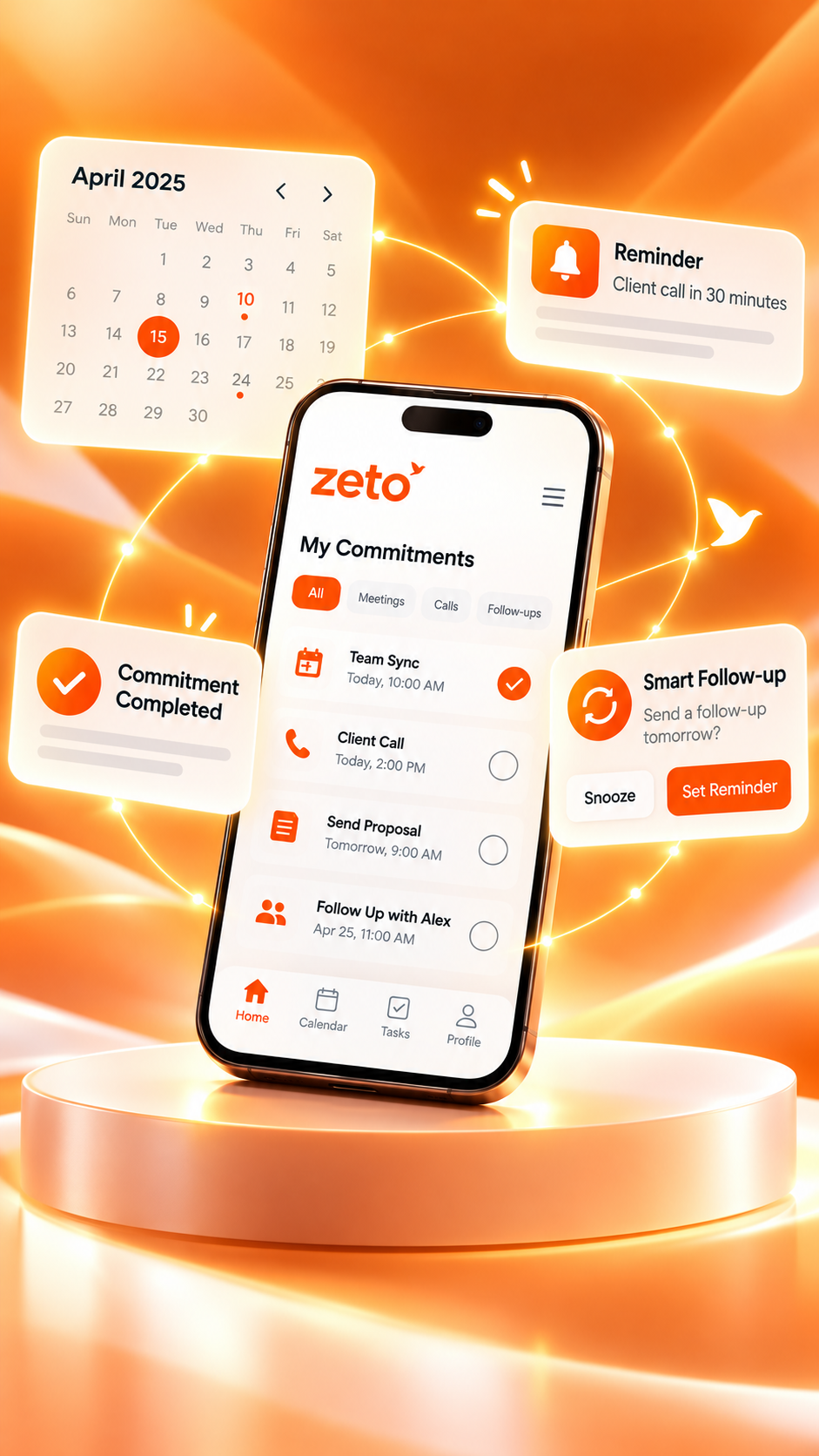
ZETO AI focuses on making captured work conversations easier to understand and revisit. Its published app description includes summaries, reminders from follow-up commitments, a history organized around people and projects, and Ask Zeto—a way to ask questions about conversations that have already been captured and processed.
For example, a professional can ask what rate was previously discussed, which commitment is still open, or what they promised during the week. Published product information says Ask Zeto provides a source for its answers, which users can review when a detail matters.
ZETO Enterprise is positioned around visibility into team interactions and follow-through. For leaders, the practical value is the possibility of examining the conversation behind a reported activity, then asking a clearer question about the business problem.
ZETO App
Conversation summaries, follow-up reminders, people and project history, and source-backed questions from captured content.
ZETO Enterprise
A business-facing perspective on conversation context, commitments and what may need leadership attention.
Know the customer story behind the report.
Explore how ZETO AI organizes conversation context and how ZETO Enterprise approaches better visibility across everyday work.
On compatible Android phones, the ZETO AI app uses phone-call recordings saved by the device's own Phone app when enabled and legally permitted; it does not independently record standard calls. Its meeting and voice-note recording capabilities work differently. Features and availability may vary by device and account setup.
Accuracy, privacy and fair review come first
Conversation intelligence can help business teams recover context, but automated transcription and summaries may contain mistakes. Similar-sounding names, technical terms, dates and prices deserve extra care. Treat AI-generated observations as reviewable inputs, not automatic proof of employee performance or customer intent.
Before adopting any conversation-review process, define appropriate recording consent, which teams can access which information, how long content is retained, and how employees or customers can raise an accuracy concern. The rules vary by location and organization. When an AI answer influences a business decision, check its original source and relevant human context.
A thoughtful review process should improve cooperation between managers and teams: a clearer customer requirement, a more accurate handoff, and a visible resolution. That is a stronger outcome than collecting more recordings without a defined purpose.
FAQs: CRM dashboards and conversation intelligence
What can a CRM dashboard tell you about customers?
Depending on the platform, a CRM dashboard can show opportunities, account records, pipeline stages, activities, service requests and performance measures. Some modern CRMs also include AI-assisted conversation capabilities.
Why might a CRM dashboard miss customer context?
Important details can remain in unrecorded calls, short notes, disconnected meeting files or inaccurate summaries. A dashboard that shows only the latest status may not capture what was actually requested or promised.
Does conversation intelligence replace CRM software?
No. CRM software remains useful as a shared system for contacts, opportunities, tasks and related records. Conversation intelligence can add reviewed context to help people understand and act on those records.
Can modern CRM tools already analyze customer conversations?
Yes. Many newer CRM products provide recording, transcription, AI summaries or intelligence features, either natively or through integrations. Evaluate what your actual system includes before purchasing another tool.
How does conversation context help sales follow-ups?
It can make the next action more specific by preserving the customer's request, unresolved question, promised response and intended deadline, provided the source is captured accurately and reviewed when necessary.
Does ZETO AI connect directly to my CRM?
Do not assume that it does. This article does not represent a verified integration with Salesforce, HubSpot or any other CRM. Confirm current integration availability with the ZETO team for your setup.
Can ZETO AI automatically record every phone call?
No. Its current published Android description says it processes call recordings saved by a compatible phone's own Phone app when available, enabled and legally permitted. It does not independently record standard phone calls.
How should a manager use AI-generated call summaries?
Use them as a starting point for reviewing a selected customer issue or coaching opportunity. Check disputed names, figures, dates and commitments against original sources, follow consent requirements and invite employee context before making judgments.
Your customer story is bigger than a pipeline stage
CRM dashboards remain essential for organizing customer relationships and understanding what your team is doing. But activity, revenue forecasts and opportunity stages cannot always tell the full story of what a customer needs. The missing piece may be a technical condition, a changed requirement, an unanswered question or a promise that has not yet been fulfilled.
The strongest teams combine reliable CRM records, trustworthy conversation context and human judgment. They use that combination to understand why a deal has slowed, make clearer commitments, support colleagues fairly and respond to customers with greater precision.
So the next time your dashboard looks healthy but an important deal remains open, ask a better question: “What did the customer actually say—and what needs to happen next?”