Can AI Turn Customer Phone Calls Into Follow-Up Reminders?
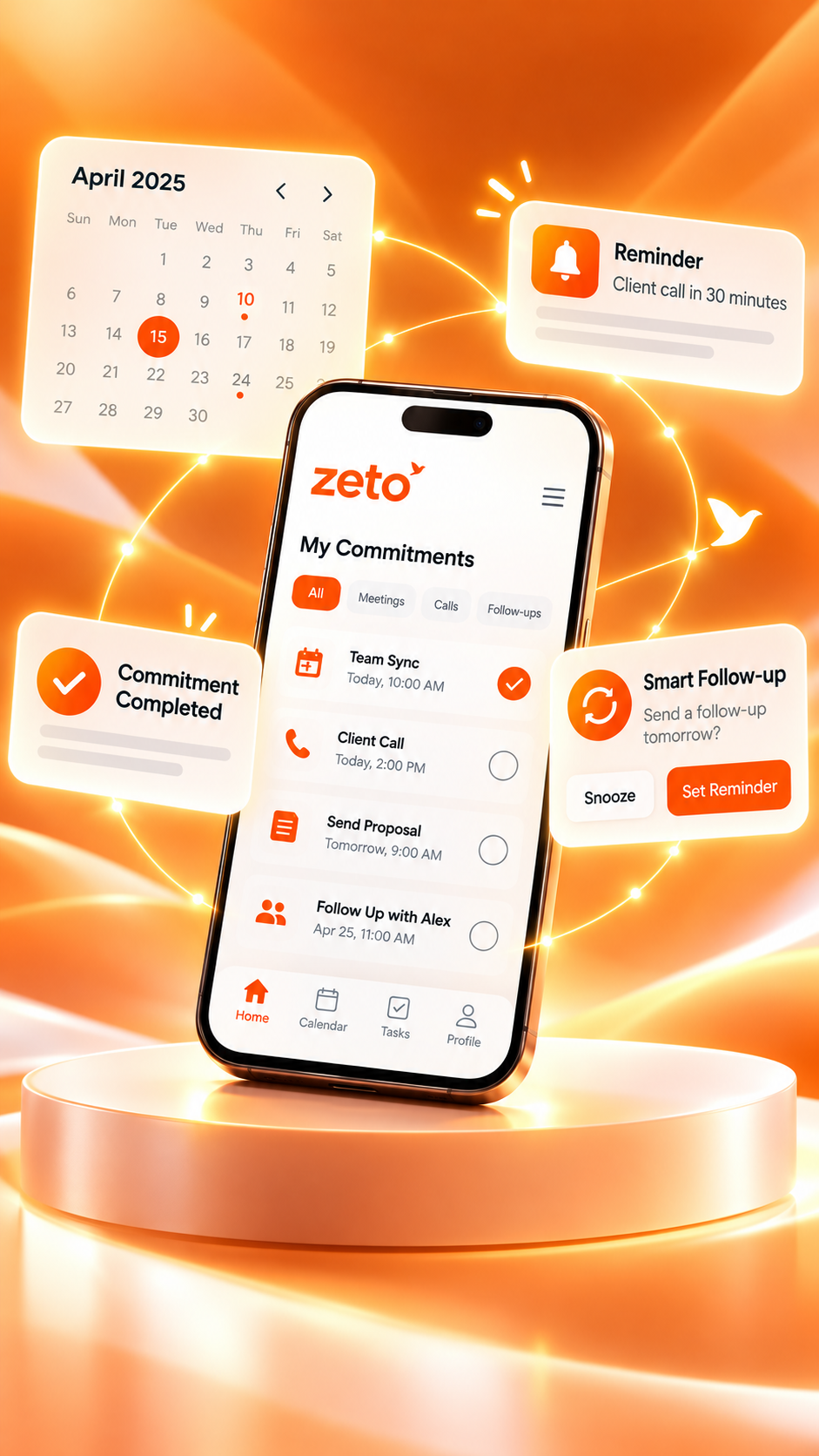
A customer says “call me Friday,” a supplier promises a quotation, and a delivery update slips into a busy day. Here is how AI can help preserve the next step.
Yes. When an eligible phone call is captured, AI can identify a stated commitment, its owner and a date or time, then organize the information as a follow-up reminder. ZETO AI describes this workflow for supported phone-saved recordings on Android; it does not independently record ordinary phone calls. Any suggested due date should be checked against what was actually agreed.
From a recorded call to a checked reminder: preserve the customer promise, owner and deadline. This guide explains the practical workflow, the details worth checking, and how ZETO AI can fit into a real working day.
Why a follow-up disappears after a good call
A phone call often contains more operational information than a quick CRM status suggests. One customer may accept the price but ask for revised payment terms. Another needs a site visit before confirming an order. A third says “send the specification before lunch.” If the caller remembers only the general mood of the conversation, the action can disappear.
The problem becomes more serious when one person handles ten or twenty business conversations. The task is not simply to remember the customer’s name. It is to preserve exactly what was requested, who agreed to act, and when the customer expects an answer.
A useful call summary therefore separates conversation context from commitments. “Customer interested” describes a sales stage; “send the updated 12 mm specification by 3 pm” describes an action. Only the second tells someone what to do next.
How AI turns a conversation into a reminder
A practical workflow starts with a recording or note that the user is permitted to capture. Speech recognition converts spoken words into text. A language model then examines the discussion for requests, promises and time expressions. A productivity assistant may organize those into a daily list or reminder.
The important distinction is that an AI-generated reminder is an interpretation of the conversation, not proof that the task was agreed exactly as written. Words such as “maybe,” “if approved,” or “sometime next week” must not silently become a firm promise. If an exact deadline is missing, ask the person rather than guessing.
For example, “I can share the quotation once finance signs off” is a conditional next step. The useful reminder may be “check finance approval” rather than “send the quotation today.” A system that preserves conditions is more helpful than one that merely extracts dates.
A practical customer quotation example
Imagine a building-material supplier receives a customer call on Tuesday. The buyer requests prices for two materials, asks about delivery to Jigani, and says the final order will depend on a revised credit term. The sales representative agrees to share a quotation by Wednesday afternoon and call after the buyer reviews it.
A weak note might read “Customer wants quotation.” A useful post-call summary would capture the materials discussed, delivery location, requested credit change, quotation deadline, and a separate follow-up after the customer has time to evaluate it.
This is a hypothetical example, not live ZETO customer information. It illustrates a broader principle: the follow-up is valuable because it stays connected to the conversation that created it.
What ZETO AI contributes to this workflow
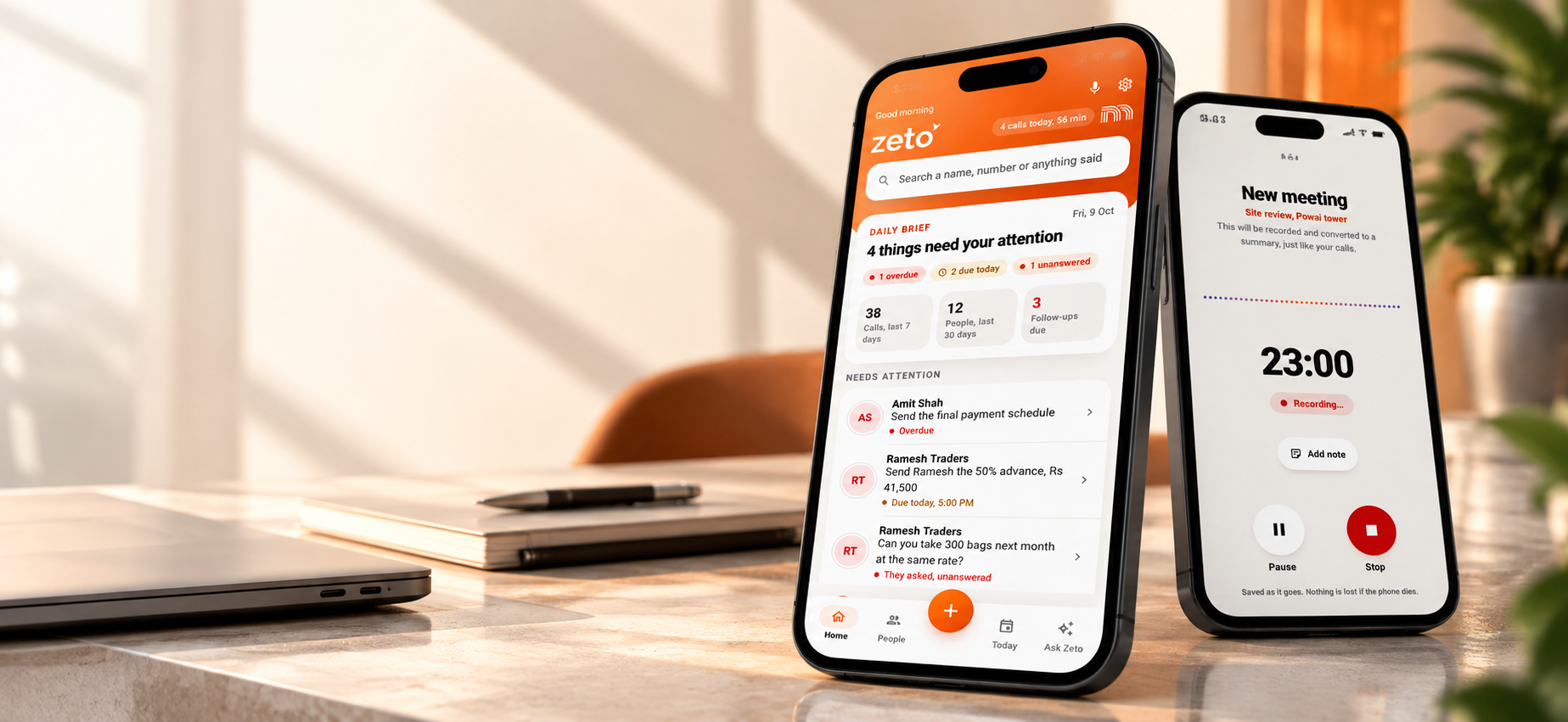
According to its Android listing, ZETO AI picks up eligible call recordings saved by the phone’s own Phone app, converts them into summaries, and organizes promises and reminders. Its Today view surfaces what is overdue, due today, and owed by other people.
ZETO also groups conversation history by person, making it easier to check what a customer previously asked for or what price was discussed. With Ask Zeto, users can query earlier conversations and see the source behind an answer. This should make reviewing a reminder more meaningful than viewing a task with no context.
Compatibility matters: not every Android device or carrier supports recording, and recording permissions vary by region. On iPhone, ZETO’s listing describes meetings, voice notes, typed notes and imported audio; do not assume the Android saved-call workflow operates identically across platforms.
A reliable daily routine for sales and service teams
After each permitted recording, review the summary before relying on any extracted amount, date or promise. If a reminder has an owner, make sure that person knows about it. Use a short morning review to separate overdue items from today’s tasks, then verify that a promised response was actually delivered.
When the customer changes a requirement, capture the updated conversation instead of silently replacing the earlier agreement. The sequence of decisions matters during disputes, handoffs and repeat orders.
Use the assistant as a memory aid, not an autopilot: it can help bring actions to attention, but a person remains responsible for approving wording, contacting the customer and marking the outcome accurately.
Practical checklist
- Capture the conversation only with appropriate permission.
- Check any extracted date, amount and named owner.
- Distinguish a customer request from a confirmed promise.
- Review today’s reminders before making fresh calls.
- Close the loop by confirming the customer received the response.
Frequently asked questions
Can AI automatically create reminders from phone conversations?
An assistant can identify follow-up commitments from captured audio and propose or organize reminders. Review the reminder before depending on it, especially when the conversation was conditional or ambiguous.
Does ZETO AI record all Android calls by itself?
No. Its Android listing says it processes recordings saved by the phone’s own Phone app, where the phone and local rules allow recording.
Can AI recognize a date spoken in Hindi?
ZETO’s published description gives examples of Hindi time expressions being interpreted for reminders. Confirm the output if a date has business consequences.
What if a customer never gave a specific deadline?
Use a clarification reminder or contact the customer. Do not treat a guessed date as a confirmed customer commitment.
Can a reminder replace a CRM activity?
A reminder can support personal follow-through; it is not a substitute for a complete CRM process or evidence of a closed deal.
Will a customer receive an automatic message?
Do not assume that. ZETO’s published description emphasizes summaries, reminders and searchable history, not automatic outbound customer messages.
How can managers use these reminders?
Review overdue commitments, handoffs and outcomes with relevant context while respecting employee privacy, access limits and recording consent.
What should I check before trusting a call summary?
Verify the customer name, amounts, dates, conditional wording and the section of the original recording relevant to the action.
Sources and further reading
Product information checked against official ZETO AI listings on 28 October 2026. Availability and compatibility may change. Obtain necessary consent before recording; confirm critical details against the original source.