What Happens When AI Meeting Notes Get Dates, Names or Amounts Wrong?
A beautifully written summary can still be wrong. The most costly mistakes are often a single digit, deadline or name.
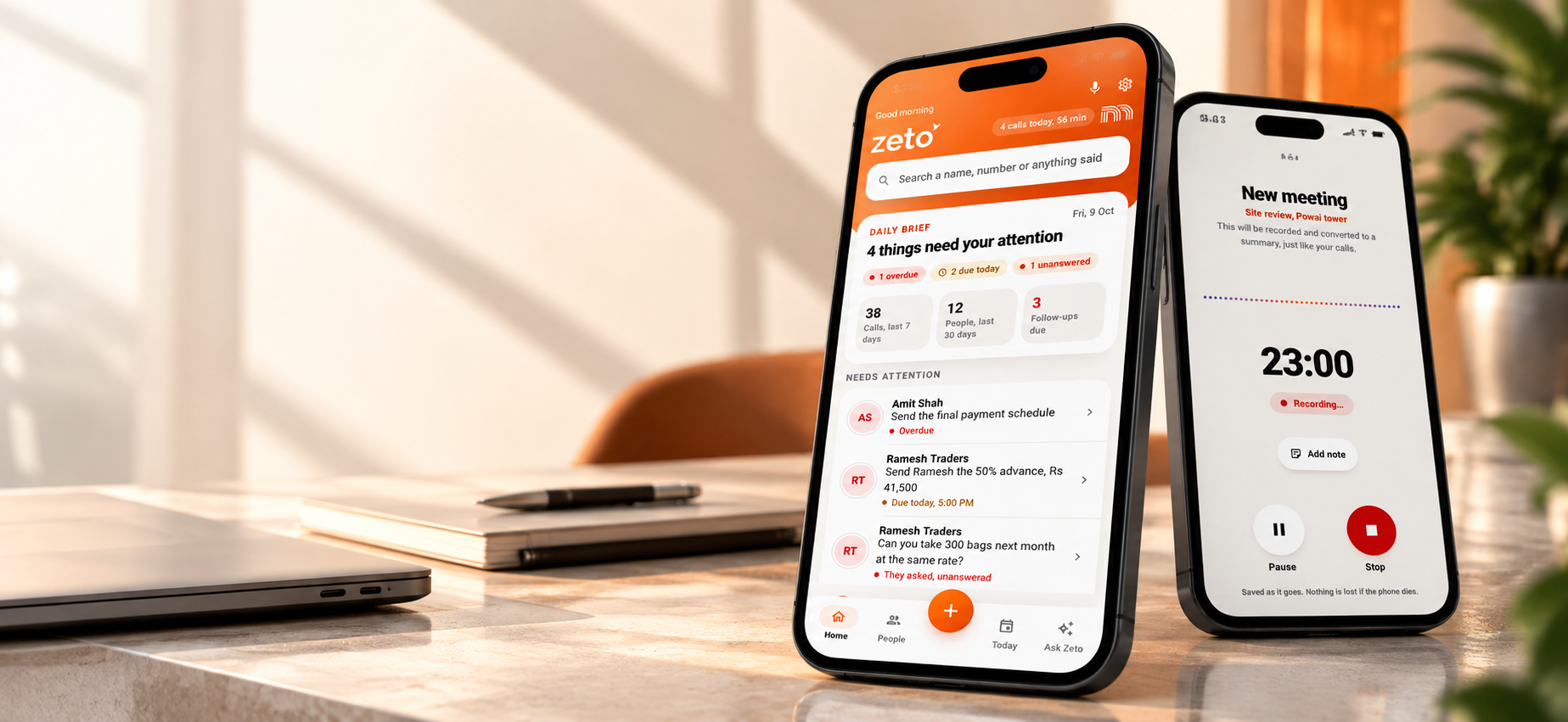
AI meeting notes may mishear a person’s name, change a conditional promise into a confirmed task, or misinterpret an amount or date. The safest workflow is to check high-impact details against the original audio, confirm ambiguous statements with participants, and correct the record before action. ZETO AI’s published Ask Zeto feature shows source information for answers, which can support that review.
AI notes are drafts of a conversation. Verify important dates, figures, names and commitments before acting. This guide explains the practical workflow, the details worth checking, and how ZETO AI can fit into a real working day.
Why small transcription mistakes become large decisions
An AI meeting note can feel authoritative because it is cleanly formatted. Yet the source may have been noisy, a speaker may have corrected themselves, or two people may have spoken over one another. The resulting sentence may sound plausible while being factually different.
The risk increases with numbers: ₹15,000 can become ₹50,000; a delivery request for Thursday can be interpreted as a confirmed Thursday deadline; a named customer may be linked to the wrong project. These are not cosmetic errors. They can trigger the wrong quotation or an avoidable conflict.
People should therefore distinguish a readable summary from a verified business record. Use the AI for a first draft of the discussion, but give greater attention to facts whose error could cost money, time or trust.
The five error categories that matter most
First are amounts and units: rates, discounts, quantities, currency and taxes. Second are dates and times, including expressions such as “next Friday” and “kal shaam.” Third are names and ownership, particularly when several people have similar names or roles.
Fourth are conditional statements. “I can deliver if the material arrives” is not the same as “I will deliver.” Fifth are unresolved disagreements that a summary might smooth into consensus. If a decision was never made, the note must preserve that uncertainty.
A good verification habit highlights each of these before circulation. The goal is not to distrust every summary; it is to spend review time where errors have the highest consequences.
Example: a mistaken payment amount
Imagine a supplier and buyer discussing two amounts: an advance of ₹40,000 and a total order value of ₹4,00,000. The buyer says the advance is subject to internal approval. An inaccurate note assigns the entire order amount as the advance and marks it due immediately.
A team acting on that note could send the wrong request to the customer. Instead, a reviewer should inspect the relevant section of the original audio, distinguish total value from advance, and mark finance approval as pending.
This scenario is fictional, but the control is practical: never use an unchecked AI-generated number to issue an invoice or alter contractual terms.
Build a human review system that is fast
Use a risk-based review instead of replaying every second of every meeting. Start with a short checklist: who is responsible, what exactly was agreed, what remains open, and what is the date or amount? Then verify only the sensitive or ambiguous parts using source audio or a participant confirmation.
When a correction is necessary, preserve the reason for it rather than silently rewriting history. A corrected due date is operationally useful, but the team should understand whether the change reflects an AI mistake or a new customer instruction.
When publishing a meeting summary to customers, consider asking participants to confirm key commitments in writing. An AI note should never be treated as a contract merely because it is formatted professionally.
How ZETO AI supports source-backed review
ZETO’s official app descriptions say Ask Zeto answers questions about past conversations and shows where each answer came from. Android’s listing also describes a way to report a wrong answer. These are useful features for checking an interpretation against its origin.
The product also organizes summaries into what happened, what was decided, promises and open points. That structure can help reviewers notice when a customer request is being mistaken for a company commitment.
As with other AI systems, accuracy depends on capture quality and context. Users should check critical numbers and names before taking action. Recording and access must follow applicable law, consent and company policy.
Practical checklist
- Check every material amount, unit and currency.
- Verify dates that depend on “tomorrow,” “next week” or similar phrases.
- Confirm the correct person owns each commitment.
- Separate conditional offers from firm agreements.
- Use the original recording or written confirmation for high-stakes decisions.
Frequently asked questions
Can AI meeting notes be wrong even when they sound natural?
Yes. Fluent language does not guarantee that names, dates, values or the intent of the speaker were captured accurately.
What meeting details should I verify first?
Prioritize numbers, financial terms, deadlines, ownership, conditional statements and anything used for a contract or customer promise.
Should I send an AI summary directly to a customer?
Review it first and verify key commitments. If the matter is important, ask the recipient to confirm material terms.
Can ZETO AI show where an answer came from?
Its published app listings describe Ask Zeto answers with source references to captured conversations.
What if two people disagree about what was said?
Review the original recording where permitted, then resolve the difference through appropriate human discussion and written confirmation.
Do AI notes replace signed documents?
No. Notes can help locate context but should not replace binding agreements or formal written approvals.
How can teams avoid repeated summary errors?
Improve recording conditions, use clear language, review important facts and create a simple correction process.
Can AI reliably understand relative dates such as “next Friday”?
Sometimes, but date interpretation can depend on context and timezone. Confirm a calendar date when the deadline matters.
Sources and further reading
Product information checked against official ZETO AI listings on 28 October 2026. Availability and compatibility may change. Obtain necessary consent before recording; confirm critical details against the original source.